The Object of Rotary

The Object of Rotary is to encourage and foster the ideal of service as a basis of worthy enterprise and, in particular, to encourage and foster:

FIRST: The development of acquaintance as an opportunity for service;

SECOND: High ethical standards in business and professions, the recognition of the worthiness of all useful occupations, and the dignifying of each Rotarian's occupation as an opportunity to serve society;

THIRD: The application of the ideal of service in each Rotarian's personal, business and community life;

FOURTH: The advancement of international understanding, goodwill, and peace through a world fellowship of business and professional persons united in the ideal of service.

About Rotary

Rotary International is a global network of service volunteers. It is the world's largest service organisation for business and professional people, with some 1,210,905 members operating in 168 countries world-wide

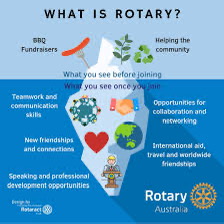
There are some 58,000 Rotarians in Great Britain and Ireland in 1,845 clubs, helping those in need and working towards world understanding and peace. It is a fulfilling role, and Rotarians can get involved as much or as little as their time will allow.

But there is much more. Clubs meet on a regular basis, which allows members to build firm friendships. Every Rotarian has a right to attend any Club meeting anywhere in the world, so there is always somewhere to go, and people to meet, wherever business or leisure travel may take you.

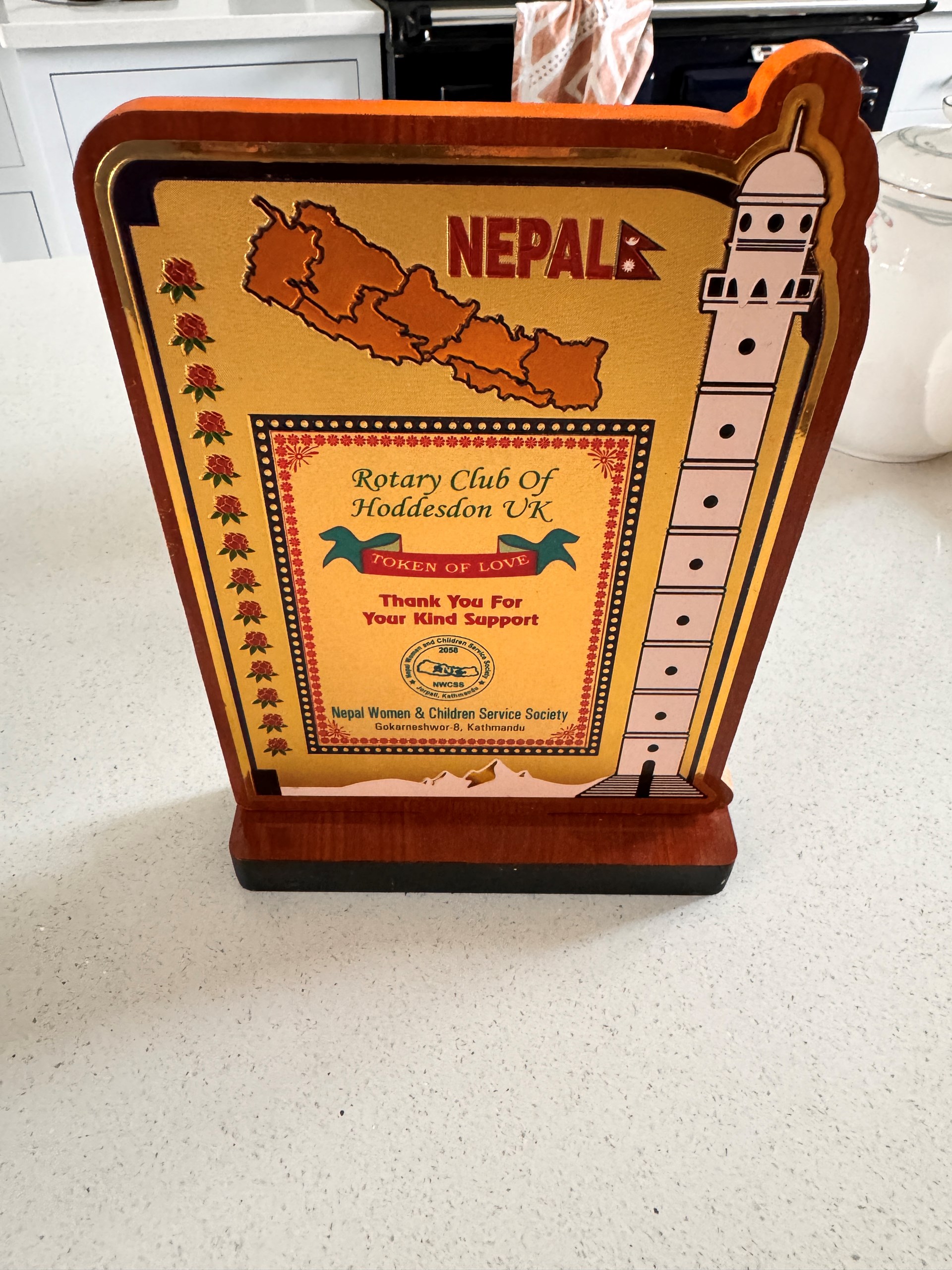
Various Clubs have different emphases, which can reflect differences in size. A small market town may have a Club of perhaps 20 members, whereas in large centres the number can be closer to 100. Some concentrate on local community or vocational projects. Others link up with a sister club in another country to undertake an international project. Each Club decides how it wants to use the resources it has available.

History

On February 23, 1905, Chicago lawyer, Paul P Harris, called three friends to a meeting. What he had in mind was a club that would kindle fellowship among members of the business community. It was an idea that grew from his desire to find within the large city the kind of friendly spirit that he knew in the villages where he had grown up.

Room 711 of the Unity Building at 127 North Dearborn Street in downtown Chicago, Illinois, was the site of Rotary's first meeting on February 23, 1905. At that time, it was the office of Gustavus Loehr, a mining engineer and one of the founding members of the organization.

The four businessmen didn't decide then and there to call themselves a Rotary club, but their get-together was, in fact, the first meeting of the world's first Rotary club. As they continued to meet, adding others to the group, they rotated their meetings among the members' places of business, hence the name.

Soon after the club name was agreed upon, one of the new members suggested a wagon wheel design as the club emblem. It was the precursor of the familiar cogwheel emblem now worn by Rotarians around the world. By the end of 1905, the club had 30 members.

The second Rotary club was formed in 1908 half a continent away from Chicago in San Francisco, California. It was a much shorter leap across San Francisco Bay to Oakland, California, where the third club was formed. Others followed in Seattle, Washington, Los Angeles, California, and New York City, New York. Rotary became international in 1910 when a club was formed in Winnipeg, Manitoba, Canada.

By 1921 the organisation was represented on every continent, and the name Rotary International was adopted in 1922..

What Drives Us

Rotary is not an exclusive organisation - it draws its membership from men and women of all races faiths and cultures who share a common interest in helping both local community and international charitable causes. Members can visit other clubs - here and abroad - they will always receive a warm welcome.

Rotary is non-political and non-governmental. Rotary clubs are autonomous and always seek creative solutions to the needs of the community at home and further afield. Rotary members dedicate their time, skills, expertise, and other resources toward improving the human condition.

Rotary promotes cultural understanding and brings people together, even when they live worlds apart. Rotary exchange programmes foster the free flow of ideas and opportunities across national borders.